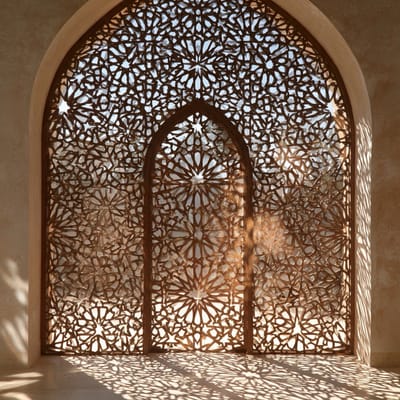
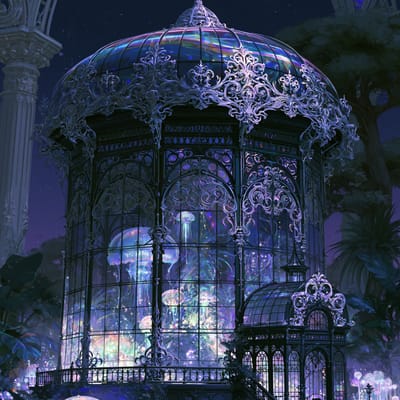
Arabesque—Arabesque is an ornamental visual style built on rhythmic, interlacing scrollwork, flowing floral tendrils, and intricate repeating geometric curves.
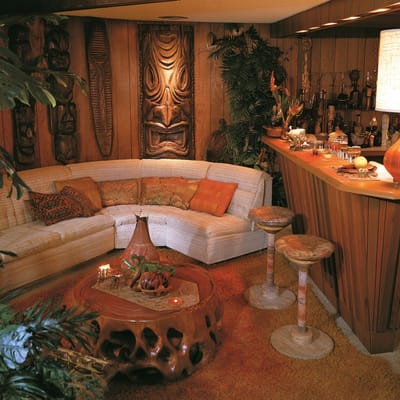
Tiki modernism—Tiki modernism is a mid-century style fusing Polynesian escapism with sleek modern architecture, featuring sharp A-frame roofs, carved timber, and amber lighting.
blur PMMA material—Blur PMMA (acrylic) material diffuses the subject behind frosted acrylic — soft translucency, dissolved edges, and a milky light scatter that reduces forms to glowing silhouettes.
Lunarpunk—Lunarpunk is a speculative aesthetic centered on nocturnal nature and bioluminescent technology, featuring dark palettes illuminated by soft moonlit blues and silvers.
Plunging perspective—Plunging perspective — a camera angle aimed sharply downward, making foreground elements loom large and distant subjects shrink rapidly, creating a dizzying sense of depth and scale.
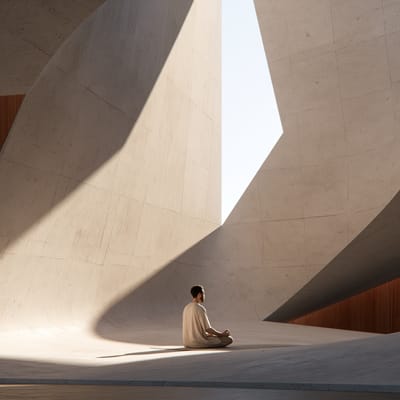
Monastic futurism—Monastic futurism is a design aesthetic blending spiritual minimalism with quiet sci-fi, marked by bare concrete, soft warm wood, and vast, silent spaces.
german expressionism—Create dramatic, psychological tension using sharp, jagged geometry, distorted architecture, and high-contrast shadow play.
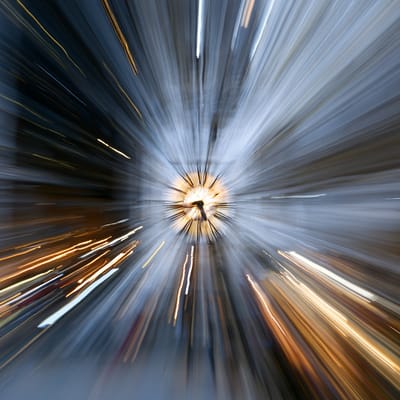
zoom burst—Zoom burst is a camera technique where zooming during a long exposure creates dramatic radial light streaks blasting outward from a sharp central subject.
pop-up retail store—A pop-up retail store is a sleek, temporary boutique pavilion featuring curated products showcased inside an inviting, minimalist architectural structure.
moon gate framing—moon gate framing is a traditional Chinese design technique that uses a circular architectural opening to frame and showcase a picturesque view beyond.
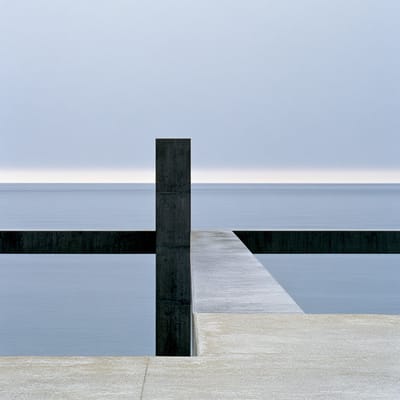
Cruciform composition—Cruciform composition is a spatial layout where strong vertical and horizontal elements intersect to form a cross shape, grounding the image with balance.
central african archecture—Central african architecture features organic, earth-walled structures like domed mud huts and intricate thatched roofs, using local clay, wood, and straw.
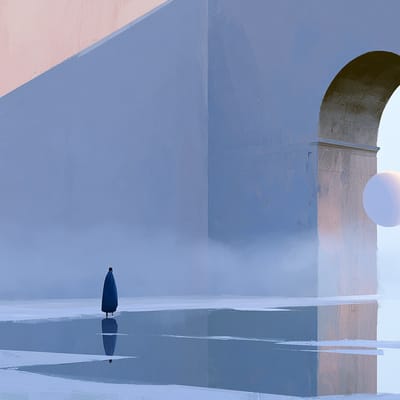
oneiric—Oneiric describes a dreamlike quality in an image, where soft light, floating elements, and gentle haze create the quiet feeling of a waking dream.
worms-eye view—Emphasize power, height, and monumental scale by composing your shot from ground level looking straight up at your subject.
blue hour light—Deep, cool, and atmospheric natural twilight occurring just after sunset, casting a serene cobalt and indigo glow across scenes.
promenade deck—Promenade deck — a wide, open-air walkway lining a ship's side, designed for leisurely strolls, ocean viewing, and relaxing in comfortable loungers.
Rabatment—Rabatment is a layout technique where a frame's short side is folded into its long side to form an implicit square, placing subjects along this dividing line.
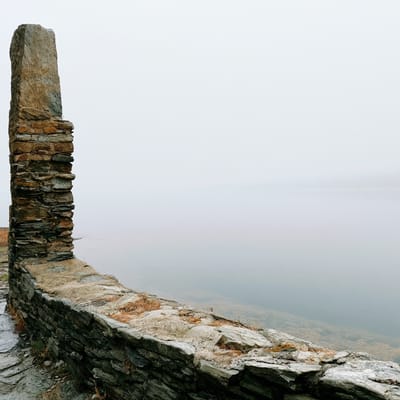
nordic noir—A moody visual style marked by desaturated slate tones, high-contrast low-key lighting, and a melancholic, starkly beautiful atmosphere.
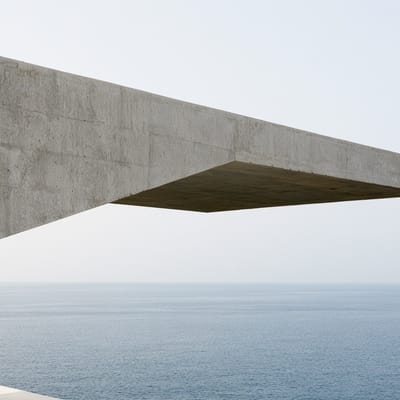
Cantilever composition—Cantilever composition anchors a visual element at one end while letting it project far out over open space, creating dramatic visual tension and overhang.
eerie—A mysterious, unsettling mood with unnatural stillness and cool, desaturated tones, hinting at something unseen just beyond the frame.
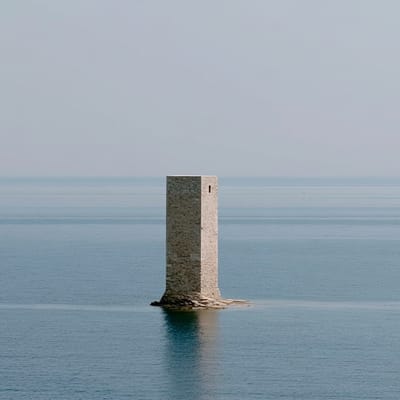
Horizontal banding—Horizontal banding is a visual composition pattern where repeating parallel horizontal lines stack across the frame, dividing the image into distinct sections.
solarpunk aesthetic—An optimistic, eco-futuristic aesthetic blending advanced green technology with organic Art Nouveau curves, lush vertical gardens, and warm, golden sunlight.
WPA poster style—WPA poster style — a 1930s silk-screen aesthetic defined by bold geometric shapes, flat color blocks, dusty earth tones, and heroic public art optimism.
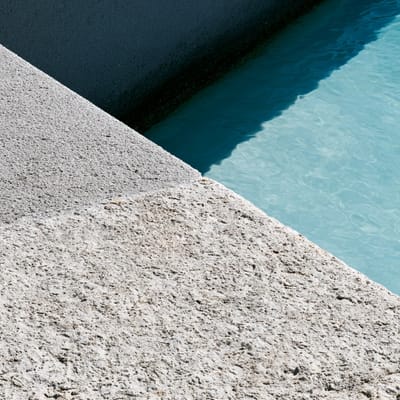
Diagonal divide—Diagonal divide is a layout where a prominent slanting boundary cuts from corner to corner, splitting the image into two distinct triangular visual areas.
Arte Povera—Arte Povera — an aesthetic defined by raw, everyday, and organic materials like burlap, rough-cut stone, rusted iron, and soil assembled in unrefined ways.
foreboding atmosphere—An ominous, tense visual tone created by looming shadows, extreme low-angle perspectives, high-contrast lighting, and a sickly, dark color palette.
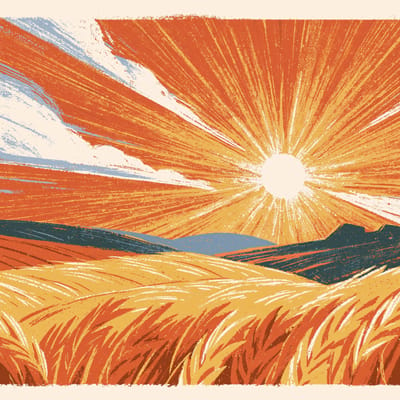
risograph print—Recreate the distinct charm of mid-century stencil printing. Capture coarse soy ink textures, organic grain, and vibrant dual-tone misregistration.
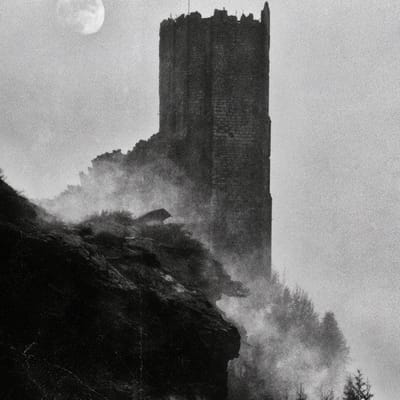
gothic aesthetic—A dark, mysterious, and romantic aesthetic drawing from medieval architecture, Victorian macabre, ornate wrought iron, and dramatic shadows.
weathering steel—A warm, earthy architectural cladding characterized by a dense, protective layer of rust-orange iron oxide with a velvety, matte texture.
impossible architecture—Impossible architecture is a spatial style where structures defy gravity and geometry, creating optical illusions of endless loops and paradoxical pathways.
zellige tilework—Transform a boutique hotel courtyard with vibrant, hand-cut zellige tilework, showcasing iridescent terracotta glaze and mesmerizing geometric mosaics.
eco-futurism—Eco-futurism seamlessly blends sleek, minimal technology with organic nature, wrapping clean architectural lines and soft glass around lush, living greenery.
L-shaped composition—L-shaped composition anchors visual weight along one vertical side and the bottom edge, forming an L-shape that leads the viewer's eye into open space.
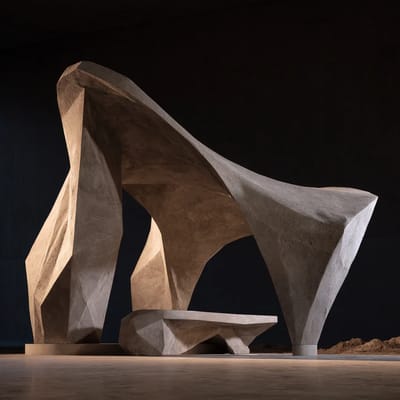
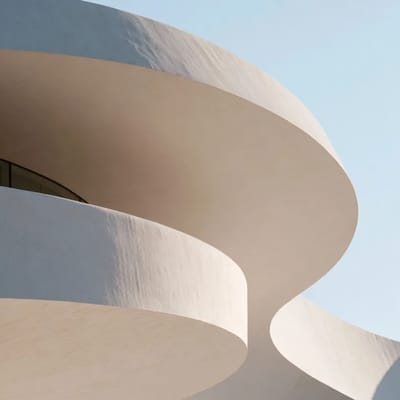
Brutalist architecture—Brutalist architecture is a mid-century movement defined by massive, monolithic concrete structures, raw unfinished surfaces, and bold geometric shapes.
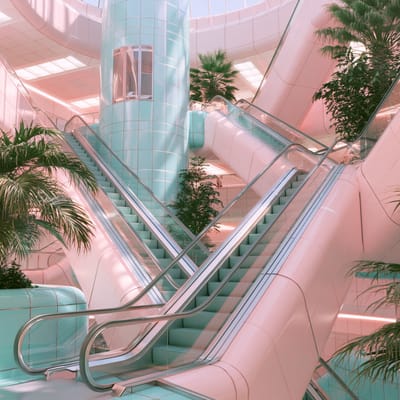
Mallsoft aesthetic—Mallsoft aesthetic — a nostalgic visual style defined by hazy pastel light, tiled shopping mall atriums, potted palms, and quiet multi-story retail spaces.
Elevator shaft view—Elevator shaft view is an extreme upward perspective from the base of a narrow vertical shaft, with walls converging steeply above and often showing the elevator mechanism at the top.
frame-in-frame composition—A compositional method using structural, natural, or shadow elements within the scene to create a secondary border around the main subject.
long exposure—Captures the flow of time by holding the shutter open, turning motion into silky streaks—water becomes mist, headlights become rivers, clouds become ribbons.
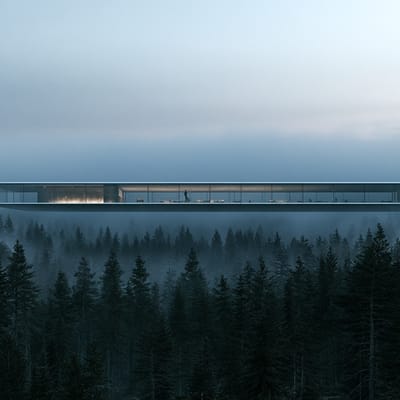
foggy forest backdrop—A foggy forest backdrop features a dense woodland shrouded in soft, low-hanging mist, creating a deep, muted background with obscured trees and filtered light.
magazine spread—magazine spread — two facing pages of a print publication designed as a single visual unit, blending editorial typography, negative space, and imagery.
dark xianxia aesthetic—dark xianxia aesthetic infuses traditional Chinese fantasy with grim, weathered textures, heavy shadows, muted ink-like tones, and decaying mythical elements.
monochromatic color scheme—A cohesive palette restricted to a single base hue, utilizing variations in lightness, saturation, and tone to define form and depth.
High-key white palette—High-key white palette is a bright, airy style where the image is deliberately overexposed to reduce contrast, resulting in a scene dominated by whites and light tones with minimal shadows.
golden ratio—Guide the viewer's eye along a mathematically harmonious spiral path, building natural momentum that lands perfectly on an off-center focal point.
rule of thirds—A foundational compositional technique placing the primary focal point off-center at intersecting grid lines for natural balance and dynamic tension.
low-angle—Camera positioned low to the ground looking upward, making subjects appear monumental, powerful, and imposing.
Dungeon synth aesthetic—Dungeon synth aesthetic is a lo-fi dark fantasy visual style defined by grainy, high-contrast monochrome medieval artwork, shadowy stone ruins, and nostalgic solitude.
Cantilevered glass pavilion—Cantilevered glass pavilion — a modern architectural structure with floor-to-ceiling glass walls projecting horizontally beyond its base into midair.
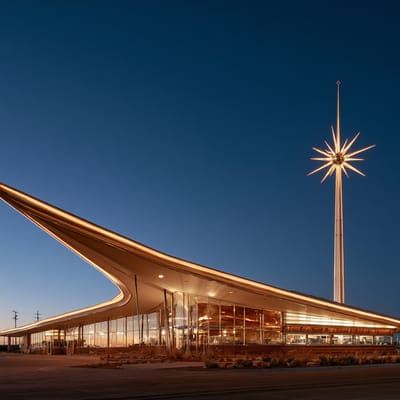
Googie architecture—Googie architecture — a mid-century futuristic design style featuring upswept roofs, geometric starbursts, neon lighting, and bold space-age angles.
dynamic symmetry—Dynamic symmetry aligns key subjects along intersecting diagonal grid lines, creating balanced visual flow and energy rather than static, mirrored balance.
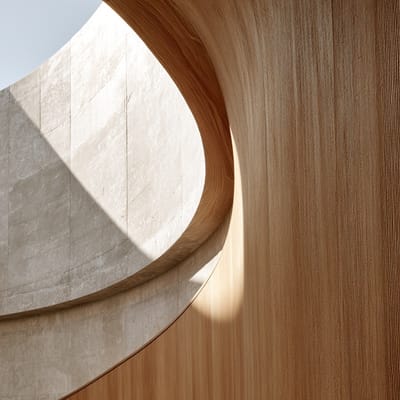
Curved cedar millwork—Curved cedar millwork — custom architectural woodwork featuring smooth, bending panels of warm cedar grain, creating soft sweeping lines inside a modern space.
hyperrealistic—Hyperrealistic is a visual quality where an image is rendered with such extreme detail, texture, and lighting fidelity that it exceeds photographic realism, often making the subject look more tangible and crisp than in real life.
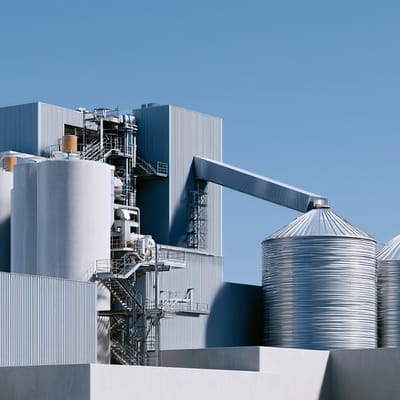
Precisionism—Precisionism is an early 20th-century art style featuring ultra-sharp lines, simplified geometric forms, and smooth industrial subjects like factories.
sanctuary architecture—Sanctuary architecture refers to serene, protective spaces blending organic minimalism with soft natural light to evoke safety, isolation, and inner peace.
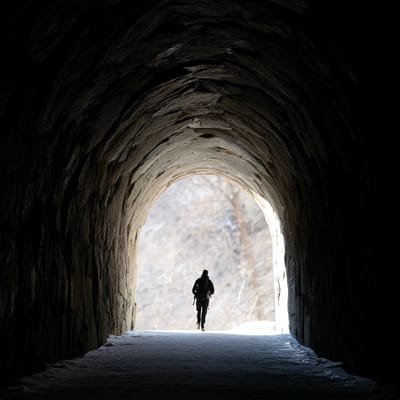
Tunnel framing—Tunnel framing — a composition technique where a dark foreground arch or tube surrounds a scene, funneling the viewer's eye straight toward a bright central subject.
foreground layering—Place out-of-focus elements very close to the lens to frame the distant main subject, adding cinematic depth and a voyeuristic feel.
columnar basalt—Hexagonal pillars of dark volcanic rock, creating structured, geometric patterns of sheer tectonic weight and architectural precision.
ornate temple eaves—Ornate temple eaves are the highly decorative overhanging edges of traditional Asian roofs, featuring layered wood brackets and detailed carvings.
symmetrical composition—Create a sense of formal balance, stability, and order by mirroring elements perfectly across a central vertical or horizontal axis.
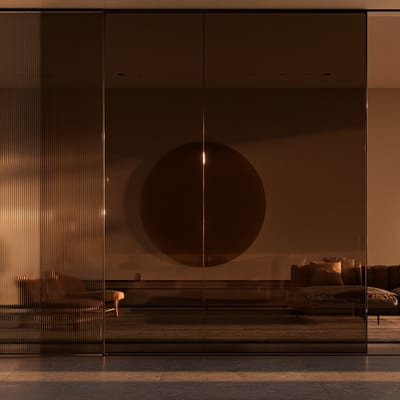
Smoked glass partition—Smoked glass partition — a translucent dark glass divider that diffuses light and silhouettes, creating muted reflections and visual division in modern spaces.
oceanview infinity pool—An oceanview infinity pool is a swimming pool designed so its water level merges seamlessly with the ocean horizon, creating an illusion of endless water.
art deco—A celebration of 1920s glamour defined by bold geometric shapes, clean symmetrical lines, metallic gold trim, and opulent streamlined structures.
venetian plaster—A luxurious, hand-troweled wall finish characterized by multi-layered polished stucco, subtle marbled depth, and a tactile, silky low-sheen mineral texture.
tense—A mood of suspense and anxiety, characterized by stark contrast, harsh shadows, and a feeling of imminent danger that tightens the viewer’s chest.
leading lines—Powerful visual pathways formed by environmental elements—like walls or roads—that forcefully guide the viewer's eye straight toward the primary subject.
Expressionist architecture—Expressionist architecture is a style where buildings twist, curve, and jut like living sculptures, using jagged angles and sweeping curves to create intense, emotional spaces.
corporate atrium architecture—Corporate atrium architecture is a soaring, multi-story open plaza inside a modern office building, showcasing massive glass skylights and clean geometric lines.
weathered wooden pagodas—Weathered wooden pagodas are ancient multi-tiered East Asian towers built from timber, displaying deep cracks, peeling lacquer, and moss from decades of exposure to nature.